LEAN KETO RECIPE · THE UNWIND
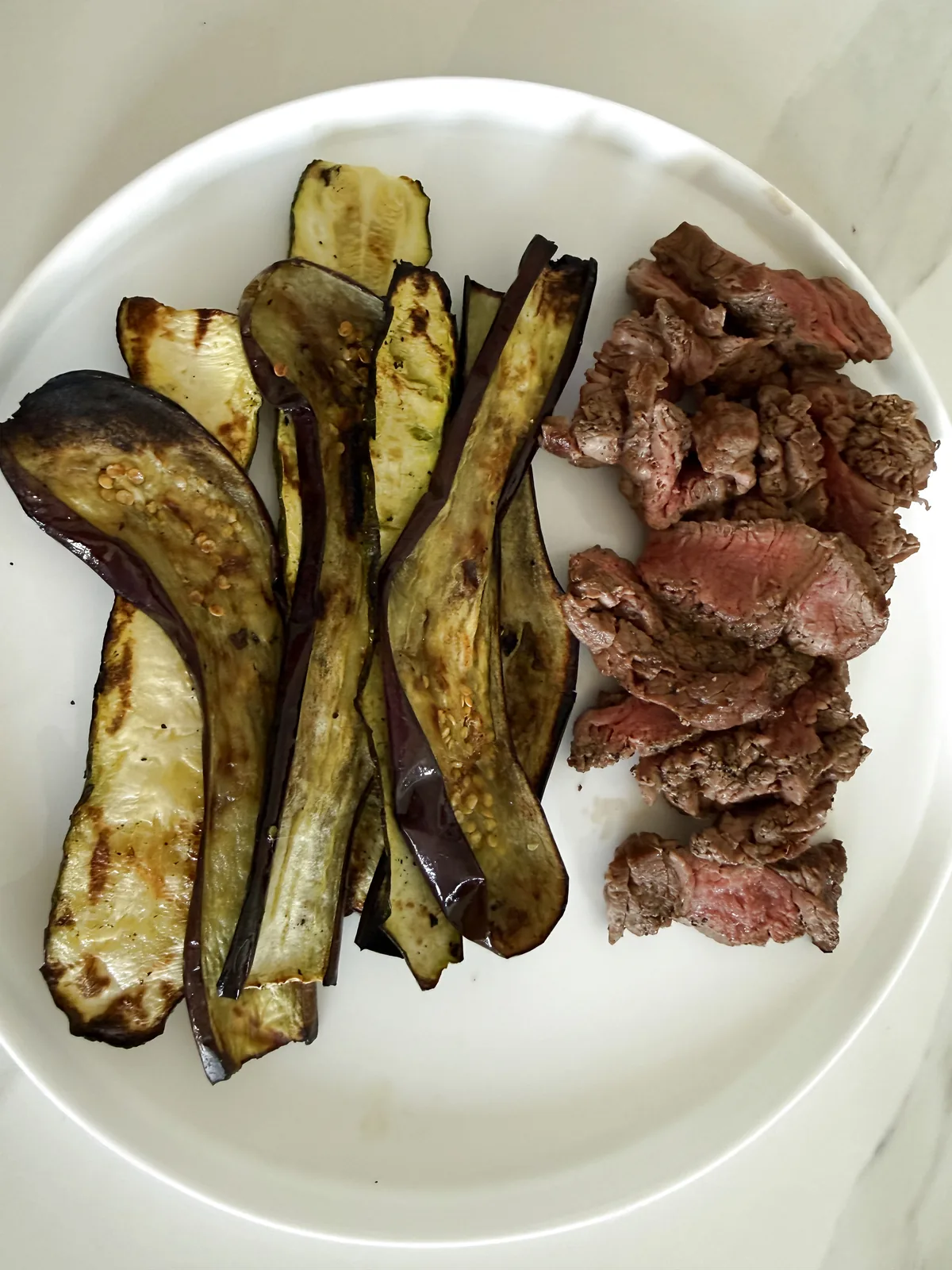
Grilled filet mignon with Mediterranean aubergine
Tender, relatively lean filet mignon with a pink centre and succulent Mediterranean aubergine makes a simple keto meal in which brining, thoroughly drying the surface and precisely measuring the oil make all the difference.
 ~6 gnet carbs
One-serving recipe
The recipe at a glance
- 01Brine the aubergine
Soak the slices in a 4% brine for 30–45 minutes.
- 02Dry thoroughly
Pat both the aubergine and meat thoroughly dry before grilling.
- 03Cook on a hot grill
Grill the aubergine first, followed by the filet to your chosen temperature.
- 04Rest the meat
Leave the filet to rest for 5 minutes before serving.
Shopping list
Ingredients
For the filet mignon
For the Mediterranean aubergine
UNWIND EATS · GOOD TO KNOW
Aubergine has a porous, sponge-like interior, so it can absorb a considerable amount of oil when cooked with plenty of fat. In a frying study, soaking aubergine in a 4.2% brine for 30 minutes reduced its fat content compared with frying it directly, although this result cannot be applied directly to grilling. Here, the brine helps season the aubergine evenly and affects its texture, while added fat is controlled primarily by weighing the oil and applying it with a brush.[1]
Step by step
Method
- 1
Take the meat out of the fridge in good time
Remove the filet mignon from the fridge 30 minutes before cooking and leave it covered on a cool part of the kitchen counter. This takes some of the chill off the surface, but there is no need to wait for the meat to reach room temperature. Do not leave perishable food at room temperature for more than 2 hours.[2]
- 2
Soak the aubergine in brine
Cut the aubergine into rounds or lengthways slices ~1.5 cm thick. Dissolve 20 g salt in 500 ml cold water in a bowl. Weigh down the slices with a small plate so that they remain submerged, then soak for 30–45 minutes.
- 3
Prepare the grill
Heat a gas or cast-iron grill, or a griddle pan, over high heat. The grate or pan should be thoroughly hot before adding the meat; this helps the surface brown quickly and reduces sticking.
- 4
Dry the aubergine thoroughly
Remove the slices from the brine, rinse them briefly and dry them very well with a clean tea towel or paper towel. A wet surface steams and browns less effectively. Brush both sides lightly with a total of 7 g olive oil.
- 5
Grill the aubergine
Cook over medium-high to high heat for 3–4 minutes on each side, until marked and tender in the centre. Dress with 10 g lemon juice, then scatter over 2 g garlic, 5 g parsley and 0.5 g oregano. Leave to rest while the meat cooks.
- 6
Dry and season the meat immediately before cooking
Pat the filet thoroughly dry, brush it with 3 g olive oil and season evenly with 1 g iodised salt and 0.5 g pepper. A dry surface is more important for a well-browned crust than leaving the meat at room temperature for a long time.
- 7
Grill and check the temperature with a thermometer
Cook a filet ~3 cm thick for ~3–4 minutes on the first side and ~2–4 minutes on the second; briefly sear the edges if needed. Timing is only a guide, so measure the temperature in the thickest part. For Pia’s preferred medium-rare result, remove it at ~52–54 °C so it reaches ~54–57 °C while resting. This is below the official guideline. FoodSafety.gov recommends at least 63 °C followed by a minimum 3-minute rest; follow this threshold for pregnant women, young children, older adults and people with weakened immune systems.[2]
- 8
Rest and serve
Transfer the meat to a warm plate and rest it for 5 minutes without covering tightly. Serve whole or sliced alongside the Mediterranean aubergine.
The role of the ingredients
Why these ingredients were chosen
Filet mignon
Beef tenderloin is a cylindrical muscle on the inside of the loin; filet mignon is a smaller medallion from the tenderloin, although the precise location differs between markets. It is therefore not entirely accurate to describe it as necessarily coming from the centre.[3] The USDA entry used contains 6.5 g fat and 21.1 g protein per 100 g.[4] Beef contains haem and non-haem iron; haem iron is generally more bioavailable than non-haem iron from plant sources.[5]
Aubergine and measured olive oil
Aubergine adds volume, a tender centre and fibre. The measured 7 g oil gives the slices a thin coating, while the lower oil use comes mainly from weighing it and applying it with a brush.
Lemon, garlic, parsley and oregano
Lemon balances the richer flavour of the meat and oil, while herbs and garlic add aroma without a prepared sauce. Vitamin C improves the absorption of non-haem iron from plant foods; this effect is not generalised to the haem iron in beef.[5]
Adapt the recipe
Substitutions and tips
- Begin checking the temperature sooner for a thinner filet. Cooking time is not a reliable substitute for a thermometer.
- Use a thoroughly heated cast-iron griddle pan instead of an outdoor grill. The flavour will be slightly less smoky, but the method and oil quantity remain the same.
- Replace no more than 50 g aubergine with 50 g courgette. Courgette does not need brining and usually cooks a little faster; the macros will change slightly.
- Replace oregano with the same quantity of dried thyme or a small sprig of fresh rosemary.
- Aubergine can take up considerably more fat, so weigh any additional oil and include it in the nutritional values.
Good to know
Frequently asked questions
How should I store the prepared dish?
Cool the meat and aubergine within 2 hours and refrigerate in a sealed container at 4 °C or below. Use within 3–4 days.[6]
Can I freeze the dish?
The cooked filet can be frozen for 2–6 months according to quality guidance for cooked meat. The aubergine will be considerably softer and more watery after thawing, so it is better prepared fresh.[6]
Is this recipe keto?
Yes. One serving contains a calculated 9.75 g total carbohydrates and 5.57 g net carbohydrates, remaining within the limit before rounding.
Can I prepare the dish in advance?
Cut the aubergine and prepare the brine immediately before soaking; chop the herbs a few hours ahead. Pat the meat dry in advance and keep it uncovered in the fridge, but season and cook immediately before serving.
How should I reheat the dish?
For the best texture, reheat only the aubergine and add the sliced meat towards the end. Reheated leftovers should reach 74 °C for food safety, which will cook the filet beyond its original doneness.[7]
Why take the meat out of the fridge before cooking?
Thirty minutes takes some of the chill off the surface, but the centre does not truly reach room temperature. Even thickness, a dry surface, a thoroughly heated grill and a thermometer matter more.
Sources, methodology and limitations
- Şen, M. A. — effect of preparation methods on oil absorption in aubergine
- FoodSafety.gov — safe minimum internal temperatures
- Canadian Food Inspection Agency — meat cuts manual
- USDA FoodData Central — Beef, tenderloin steak, raw, FDC ID 2727573
- NIH Office of Dietary Supplements — Iron
- FoodSafety.gov — cold food storage chart
- USDA FSIS — leftovers and food safety
Save recipe
Grilled filet mignon with Mediterranean aubergine
- 180 g filet mignon
- 120 g aubergine
- 10 g olive oil in total
Brine the aubergine, dry it thoroughly and grill it. Dry and season the filet, cook it to your chosen temperature and rest before serving.
THE UNWIND COMMUNITY
Cook with The Unwind
Follow along for practical keto recipes, meal-planning ideas and calm support for everyday nourishment.
Join