LEAN KETO RECIPE · THE UNWIND
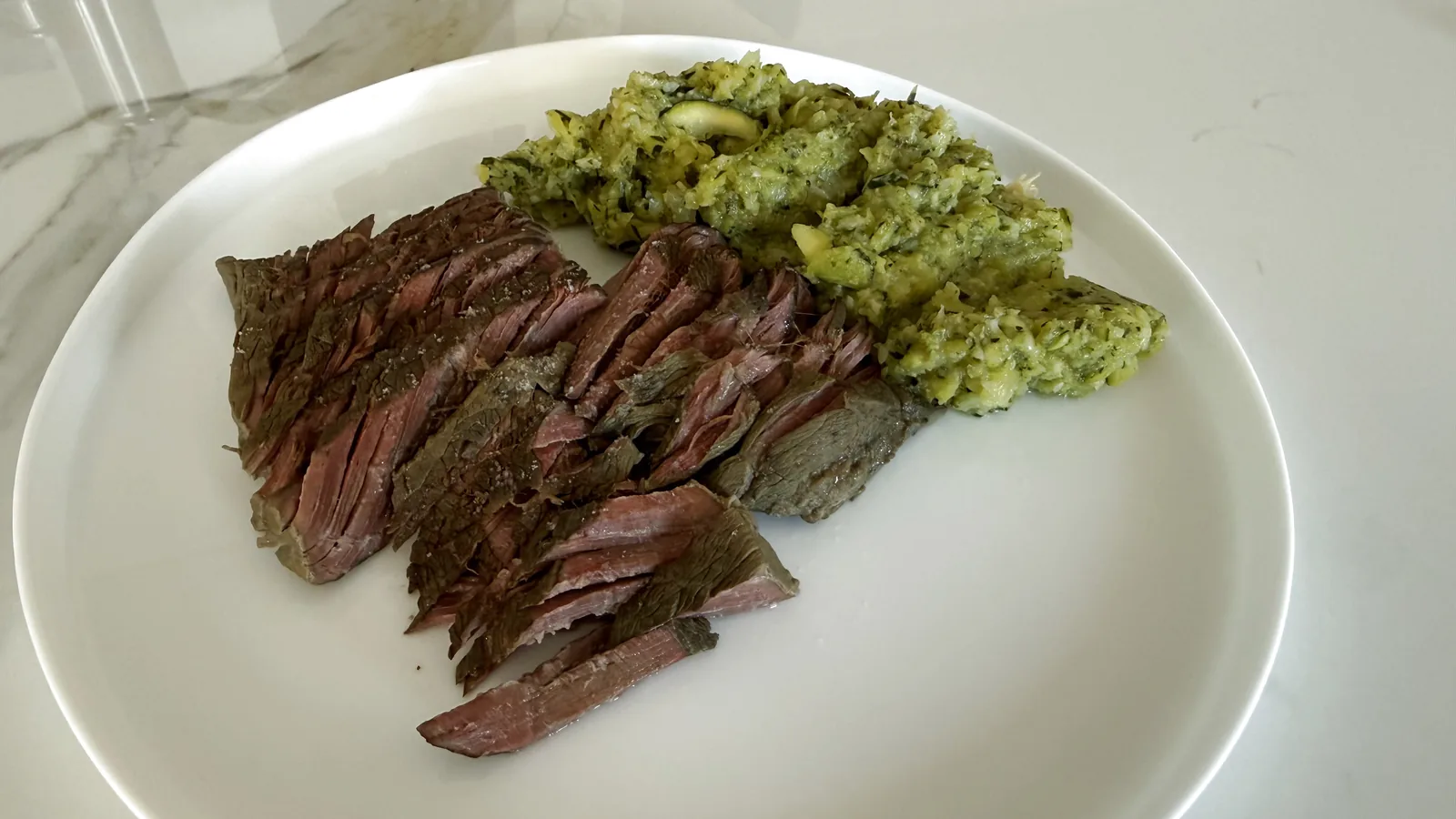
Slow-Cooked Beef with Courgette-Broccoli Purée
Lean beef slowly cooked in homemade bone broth and a smooth courgette-broccoli purée create a warming keto meal with plenty of protein and ~6 g net carbohydrates.
 ~6 gnet carbs
Slow-cooked beef
The recipe at a glance
- 01Prepare the beef
Preheat the oven to 150 °C.
- 02Sear the beef
Heat 5 g olive oil in a small cast-iron casserole or ovenproof frying pan.
- 03Add the bone broth
Pour in 150 ml homemade bone broth and scrape the browned bits from the bottom of the pan.
- 04Cook slowly
Cover the dish tightly and place it in the oven for 2–2¼ hours.
Shopping list
Ingredients
Use strained bone broth that is not overly salty. Because it will reduce during cooking, adjust the final seasoning only before serving.
Good to know
Slow cooking does not mean that every lean cut needs eight hours. For a smaller 180-gram portion, use a tightly covered dish and cook it for 2–2¼ hours at 150 °C. For 6–8 hours in a slow cooker, a larger piece weighing ~500–700 g is more suitable; divide it into portions after cooking. Always adapt the time to the size and structure of the cut; it is ready when the fibres separate easily with a fork.[1][2]
Step by step
Method
- 1
Prepare the beef
Preheat the oven to 150 °C. Take the beef out of the refrigerator just before cooking, pat it dry and season it with pepper. Add salt cautiously because the bone broth may already be salty.
- 2
Sear the beef
Heat 5 g olive oil in a small cast-iron casserole or ovenproof frying pan. Sear the beef over high heat on all sides for 4–6 minutes in total. Searing develops browned flavours; it does not “seal” the meat or trap its juices inside.
- 3
Add the bone broth
Pour in 150 ml homemade bone broth and scrape the browned bits from the bottom of the pan. The liquid should come about one-third to halfway up the beef rather than covering it completely.
- 4
Cook slowly
Cover the dish tightly and place it in the oven for 2–2¼ hours. After 90 minutes, check the amount of liquid and the tenderness. Add a little hot bone broth if needed. The beef is ready when a fork enters easily and the fibres separate without much resistance.
- 5
Prepare the vegetables
Steam the broccoli for 4 minutes, add the courgette and steam for another 4–5 minutes. Drain the vegetables thoroughly and return them to the warm pan for one minute so the excess moisture can evaporate.
- 6
Make the purée
Add 1–2 tablespoons of the beef cooking liquid and 0.2 g freshly grated nutmeg to the vegetables, then blend until smooth. Stop as soon as no lumps remain so the purée does not become thin and sticky.
- 7
Finish the sauce and serve
Transfer the beef to a plate. If needed, reduce the cooking liquid uncovered for a few minutes, check the seasoning and spoon it over the beef. Add the purée and sprinkle with 2 g finely chopped fresh chives.
The role of each ingredient
Why these ingredients were chosen
Lean beef
Top round is a relatively lean cut that provides plenty of protein as well as iron, zinc and vitamin B12. Beef contains haem iron, which is generally absorbed better than non-haem iron from plant foods.[4]
Homemade bone broth
Bone broth provides a moist environment for slow cooking, dissolves the browned bits from the bottom of the pan and brings the meat and sauce together. Here it is primarily a culinary base; because its composition varies, we do not present it as a standardised source of collagen, minerals or electrolytes.
Courgette and broccoli
Courgette adds moisture and a delicate texture, while broccoli gives the purée more structure and fibre. Together they create a side dish with less starch than conventional mashed potato.
Olive oil, nutmeg and chives
A small amount of oil helps with searing and flavour development without making the meal very energy-dense. Nutmeg rounds out the flavour of the vegetable purée, while chives add freshness at the end.
Prepare for several days
Larger slow-cooker batch
For several days, use 500–700 g defrosted beef and 500–750 ml homemade bone broth, or enough for the meat to be surrounded by liquid without necessarily being completely submerged. Sear the beef first, then cook it on low for 6–8 hours; a larger cut or one with more connective tissue will often need closer to eight hours. Start checking earlier and finish cooking according to tenderness rather than time alone. Do not put frozen meat directly into a slow cooker.[1][2]
Divide the cooked beef into portions. You can reheat leftovers with eggs the next day or use them in a salad, recalculating the nutritional values for the complete new meal.
Adapt the recipe
Possible substitutions and improvements
- If the top round is not tender after two hours, continue cooking in 20-minute intervals and add a little hot bone broth if needed.
- For a larger batch, you can also use chuck or shank. These cuts contain more connective tissue and are not necessarily as lean, so the nutritional values will change.
- You can replace some of the broccoli with cauliflower. The purée will be lighter in colour and milder in flavour.
- For a creamier purée, add another tablespoon of the beef cooking liquid rather than more oil. Add the liquid gradually.
- If you do not have bone broth, use unsalted beef broth or water; the flavour will be less full.
Safe storage
Storage
Cool the beef and purée quickly and refrigerate them in shallow, sealed containers within two hours. Store at no more than 4 °C and use within 3–4 days. Divide a larger cut into smaller portions before chilling. Reheat leftovers to at least 74 °C; do not use a slow cooker for reheating.[5][6]
Good to know
Frequently asked questions
Is this recipe only for week 5?
No. It is a standalone lean keto recipe that can be included in different meal plans. Its former connection with week 5 is no longer part of the recipe’s identity.
Does the beef need to be completely covered with bone broth?
No. When braising, the liquid should come about one-third to halfway up the beef and the dish should be tightly covered. For a larger piece in a slow cooker, use an amount of liquid suited to the appliance and recipe.
Why is the beef not ready after one exact cooking time?
Tenderness depends on the precise cut, size, amount of connective tissue, cooking vessel and actual temperature. The time is a guide; the deciding factor is whether the fibres separate easily.
Can I freeze the meal?
You can freeze the beef with its sauce in individual portions. The courgette-broccoli purée may be more watery after thawing, so stir it again after reheating and reduce it briefly if needed.
How does the recipe remain “lean keto”?
Use a lean cut with visible fat removed, measure 5 g oil and, if desired, remove the chilled layer of fat from the bone broth. The label does not mean that fat is undesirable; it means this recipe has a higher proportion of protein and a more moderate energy value.
Sources, methodology and limitations
The Unwind thought
A lean keto meal is not a contest to consume as little fat as possible. Its practical value is that enough protein, carefully measured fat and a vegetable side can create a warming meal that fits sensibly into the whole day.
Save this recipe
Slow-Cooked Beef with Courgette-Broccoli Purée
- 180 g boneless beef top round, raw weight, visible fat removed
- 150 ml homemade bone broth
- 120 g courgette with skin, raw weight
Preheat the oven to 150 °C. Take the beef out of the refrigerator just before cooking, pat it dry and season it with pepper. Add salt cautiously because the bone broth may already be salty.
THE UNWIND COMMUNITY
Cook with The Unwind
Follow along for practical keto recipes, meal-planning ideas and calm support for everyday nourishment.
Join