KETO RECIPE
Slow-Braised Beef with Broccoli and Courgette Purée
Tender herb-braised beef and a silky vegetable purée make a calm, satisfying lean-keto main with plenty of protein and no more than 10 g total carbohydrate.
Shopping list
Ingredients
For the slow-braised beef
- 200 g
- 5 g
- 2 g
- 1 g
- 1
- 0.5 g
- 1 g
- 120 ml
- 1 g
- 3 g
For the broccoli and courgette purée
- 75 g
- 90 g
- 5 g
Step by step
Method
- 1
Cut the beef into 4–5 cm pieces, pat it thoroughly dry and season with roughly half the salt and the pepper. If time allows, refrigerate uncovered for 30 minutes, then make sure the surface is dry again before cooking.
- 2
Heat the oil in a small, heavy lidded casserole over medium-high heat. Brown the beef in a single uncrowded layer for 2–3 minutes without moving it, then colour the remaining sides. Work in two batches if necessary.
- 3
Lower the heat. Add the garlic and half the thyme for 20–30 seconds, just until fragrant. Add 120 ml hot water and scrape up the browned fond. Add the bay leaf.
- 4
The liquid should reach about one-third to halfway up the meat, not cover it. Cover and braise at 150°C for about 2 hours. Check after 90 minutes and add 20–40 ml hot water if needed. The beef is ready when a fork enters with very little resistance and the fibres separate under gentle pressure. Continue in 15-minute intervals if necessary.
- 5
About 15 minutes before the beef is ready, steam the broccoli for 4 minutes. Add the courgette and steam for another 4–5 minutes, until both are fully tender but the broccoli is still green.
- 6
Spread the vegetables in a warm, dry frying pan and stir over low heat for 1–2 minutes to evaporate excess moisture.
- 7
Blend the vegetables with the butter and a pinch of the measured salt until smooth, stopping as soon as the purée is cohesive.
- 8
Transfer the beef to a warm plate and discard the bay leaf. Reduce the uncovered braising liquid for 2–4 minutes until glossy and able to coat a spoon. Stir in the remaining thyme and lemon zest. Taste before adding the remaining salt, then return the beef to the sauce.
- 9
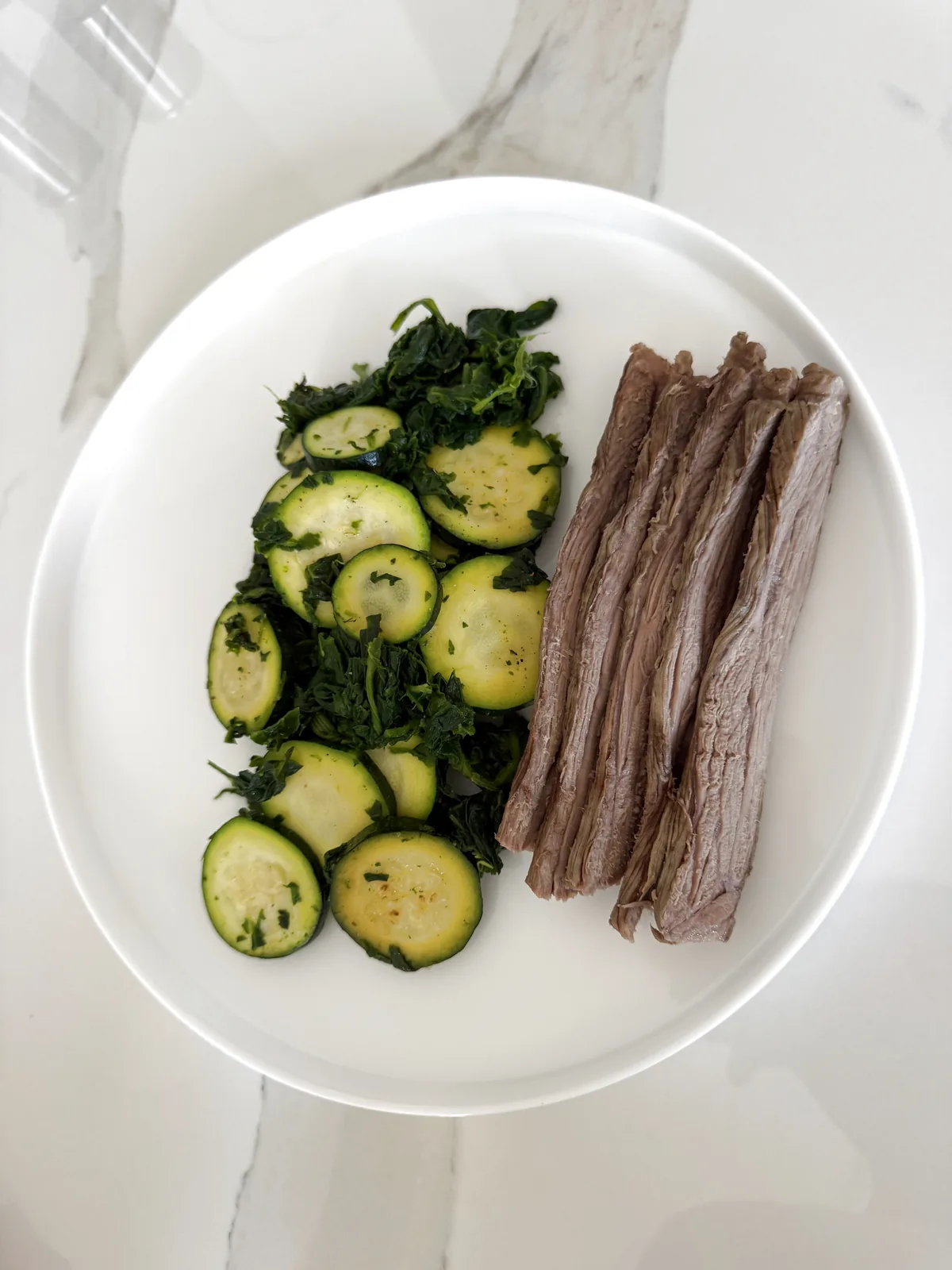
Spoon the purée slightly off-centre, lean the beef against it, add just enough sauce for a glossy finish and scatter with parsley.
Nutrition
Nutrition per serving
Values are for one serving and are calculated from the raw ingredient weights. Natural variation in the beef and the amount of sauce consumed mean these are carefully checked estimates rather than laboratory measurements.
Make it better
How to make it even better
- Choose chuck with some connective tissue but trim large external pockets of fat; tenderloin is not suitable for this long braise.
- Use a casserole only slightly wider than the meat so the liquid does not evaporate too quickly.
- Divide the thyme: the first half seasons the braise, while the fresh finish preserves its aroma.
- For two servings, double the ingredients but begin with about 200 ml water and adjust it to the pan. Do not double the cooking time.
Food science
Food science and useful detail
Why chuck?
Chuck contains more collagen than naturally tender cuts. Gentle moist heat gradually converts collagen to gelatin, tenderising the meat and giving the liquid body. Once the meat is tender, unnecessary extra cooking can continue to squeeze moisture from the muscle fibres.
Why dry the beef?
Surface water suppresses temperature and encourages steaming. A dry surface and sufficiently hot pan create stronger browning and a more complex sauce.
Why dry the cooked vegetables in a pan?
Courgette holds a great deal of water. Brief evaporation concentrates flavour and makes a dense purée without cream or extra fat.
Role of ingredients in the meal
Why these ingredients?
Lean beef chuck
Lean beef chuck provides a substantial amount of complete protein and is a source of iron, vitamin B12, zinc and selenium.
Broccoli and courgette
Broccoli contributes vitamin C, folate and fibre, while courgette adds volume and a soft texture for relatively little carbohydrate.
Olive oil and butter
The measured olive oil has a clear role in browning; the five grams of butter improve the purée rather than simply increasing fat.
Storage
Storage
This dish is best served fresh. Store the beef and purée separately in airtight containers at 4°C or below for up to 3–4 days, refrigerating leftovers within two hours. Reheat the covered beef with a spoonful of water to 74°C at the centre and warm the purée separately over low heat. The beef and sauce can be frozen for around 2–3 months; the purée may release water and lose some of its silky texture after thawing.
Save This Recipe
Slow-Braised Beef with Broccoli and Courgette Purée
- 200 g lean beef chuck
- 75 g broccoli
- 90 g courgette
- 5 g butter
Brown the beef well, braise gently until tender, then serve with the smooth broccoli and courgette purée.
References
Sources
Related recipes
Content transparency
How we prepare the data
Nutrition values are estimated from the listed amounts and may vary by brand and preparation.
USDA FoodData Central ↗