
LEAN KETO RECIPE
Alaska Pollock with Ginger, Sesame and Courgette Noodles
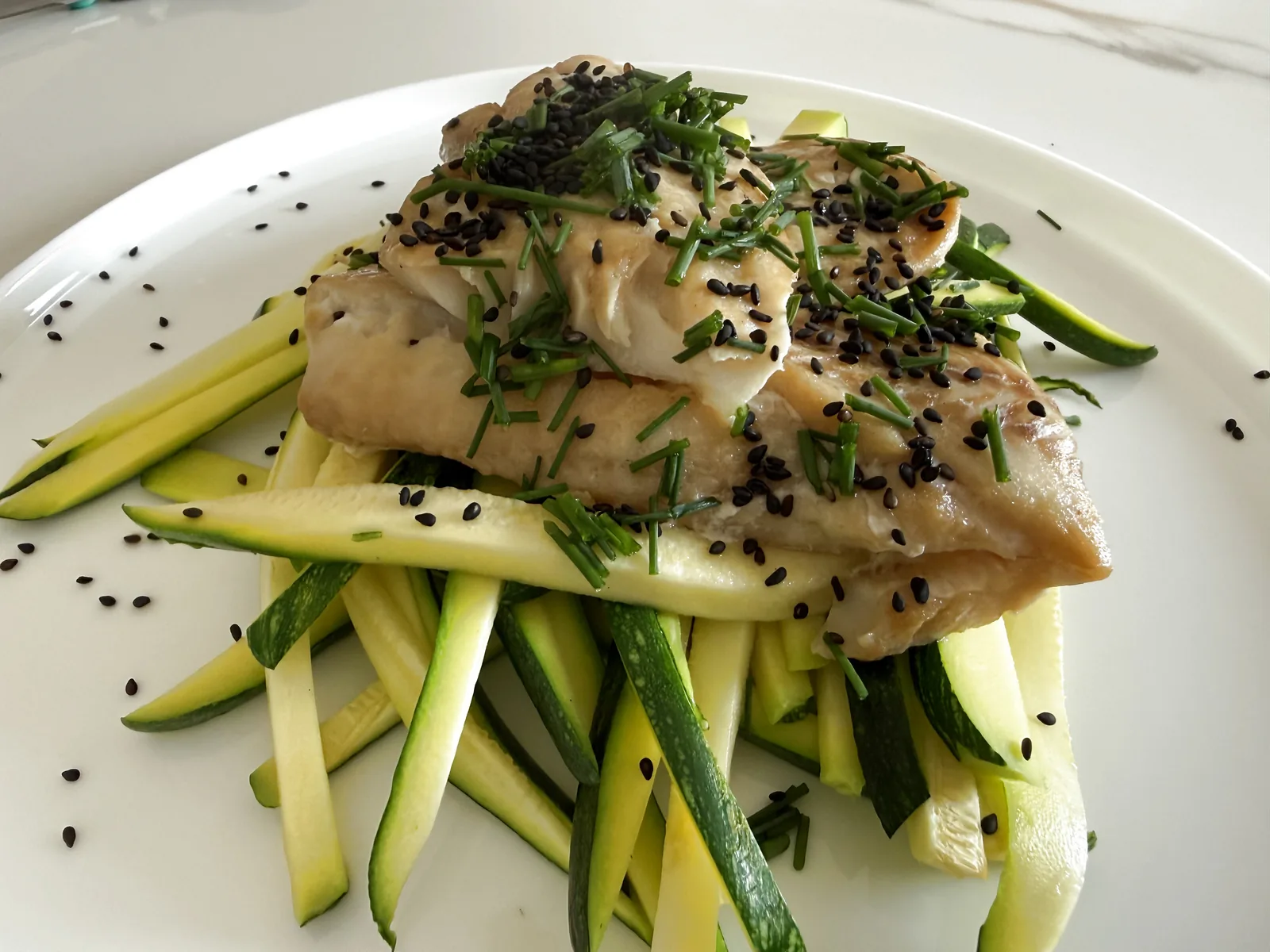
Tender Alaska pollock with ginger, tamari and black sesame makes a quick, Asian-inspired lunch that is high in protein and low in carbohydrates. It is particularly suitable for a lean keto diet.
Recipe for 1 serving
Recipe at a glance
Shopping list
Ingredients
UNWIND EATS · GOOD TO KNOW
Frozen fillets are very practical for this dish, but they are best thawed overnight in the refrigerator. Place the fillet in a covered shallow container on the bottom shelf so that its liquid cannot come into contact with other foods. Always follow the thawing instructions on the packaging of vacuum-packed fish. Pat the thawed fillet thoroughly dry before marinating so that the ginger, tamari and sesame oil mixture adheres to the fish more effectively. [1]
Step by step
Method
Thaw and dry.
Thaw the frozen Alaska pollock fillet overnight in the refrigerator. Before cooking, remove it from the packaging, drain away the liquid and pat it thoroughly dry on all sides with a paper towel. If one end is noticeably thinner, tuck the thin edge underneath the fillet so that it cooks more evenly.
Make the marinade.
Mix 5 g tamari, 8 g finely grated ginger, 2.5 g sesame oil and 0.2 g black pepper in a small bowl. Place the fish in a small ceramic or metal baking dish, coat it evenly and marinate for 15–20 minutes in the refrigerator. A small dish prevents the liquid from spreading over a large surface and evaporating too quickly.
Heat the oven and prepare the sesame seeds.
Heat the oven to 200°C or 180°C fan. While it heats, gently toast 3 g black sesame seeds in a dry frying pan over medium heat for 30–45 seconds, just until fragrant. This makes their flavour more pronounced without requiring a larger quantity.
Bake the fish.
Cover the baking dish tightly with baking parchment or a lid and bake the fish for 8–10 minutes. Uncover it, baste with the liquid from the dish and bake for another 1–2 minutes. Because Alaska pollock is lean, do not cook it longer than necessary: the thickest part should reach 63°C, while the flesh should be opaque and flake easily. [1]
Quickly heat the courgette noodles.
Heat a very wide frying pan well without oil. Add 180 g courgette noodles and toss for 60–90 seconds. Do not salt them or overcrowd the pan; the aim is warm, still slightly firm noodles without a pool of liquid.
Serve.
Transfer the courgette noodles to a warm plate and place the pollock on top. Spoon over only the cooked liquid from the baking dish. Sprinkle with the toasted black sesame seeds and 10 g spring onion. Discard any raw marinade that was not cooked with the fish.
The role of ingredients
Why these ingredients
Alaska pollock
It is a very lean source of protein: the official USDA entry for raw fish lists little fat and almost no carbohydrates. Its delicate flavour readily takes on an aromatic but carefully measured marinade, without the dish requiring a heavy sauce. [2]
Ginger, tamari and sesame oil
Ginger adds fresh heat, tamari brings saltiness and umami, and a small amount of sesame oil provides a toasted aroma. Because the fish is lean, just 2.5 g of this aromatic oil noticeably rounds out the flavour without substantially increasing the energy content of the lunch.
Courgette
Courgette noodles increase the volume of the meal and provide a fresh, mild contrast. Very brief cooking preserves their firmness and prevents water from the courgette from diluting the fish juices.
Black sesame and spring onion
Toasted sesame adds crunch, while spring onion brings freshness. Both are added immediately before serving so that their texture and aroma remain distinct.
Adapt the recipe
Substitutions and tips
- You may replace the Alaska pollock with a cod or haddock fillet of similar thickness. Adjust the baking time to the fillet’s thickness and use its internal temperature rather than the clock alone to judge doneness.
- If using a larger or thicker frozen fillet, thaw it completely before marinating; a partly frozen centre causes uneven cooking.
- Regular white sesame seeds can replace black sesame seeds without a meaningful change in quantity, although the flavour will be slightly milder.
- For a little more heat, add a pinch of chilli flakes. This amount will not meaningfully affect the displayed macros.
- Do not add the tamari to the courgette before heating, as the salt would quickly draw out water.
Good to know
Frequently asked questions
How should I store the prepared dish?
Cool the fish and courgette noodles and store them in separate sealed containers in the refrigerator at no more than 4°C. Use them within 3–4 days; for the best courgette texture, eat the dish sooner. Refrigerate it within two hours of cooking. [1][3]
Can I freeze the dish?
You can freeze the cooked pollock separately from the vegetables for up to 2 months. I do not recommend freezing the courgette noodles because they lose their firmness and release a great deal of water after thawing.
Is the recipe keto?
Yes. The entire serving contains ~9 g total carbohydrates and ~6 g net carbohydrates. Most of the carbohydrates come from the courgette, ginger and spring onion.
Can I prepare the dish in advance?
You can thaw the fish overnight, spiralise the courgette and measure the marinade ingredients in advance. Marinate the fish only 15–20 minutes before baking and heat the courgette noodles immediately before serving.
How should I reheat the dish?
Gently reheat the fish, covered, in the oven until its centre reaches 74°C. Reheat the courgette noodles separately and very briefly so that they do not become soggy. [4]
Sources, methodology and limitations
Save recipe
Save recipe
Alaska Pollock with Ginger, Sesame and Courgette Noodles
- 200 g Alaska pollock fillet, raw thawed weight
- 180 g spiralised courgette
- 5 g tamari
Thaw the frozen Alaska pollock fillet overnight in the refrigerator. Before cooking, remove it from the packaging, drain away the liquid and pat it thoroughly dry on all sides with a paper towel. If one end is noticeably thinner, tuck the thin edge underneath the fillet so that it cooks more evenly.
THE UNWIND COMMUNITY
Cook with The Unwind
Follow along for practical keto recipes, meal-planning ideas and calm support for everyday nourishment.
Join