KETO RECIPE · THE UNWIND
Beef Steak with Roasted Courgettes and Herb Yoghurt
A juicy beef steak, deeply browned courgettes and chilled herb yoghurt make a straightforward keto lunch with a strong contrast of textures and temperatures.
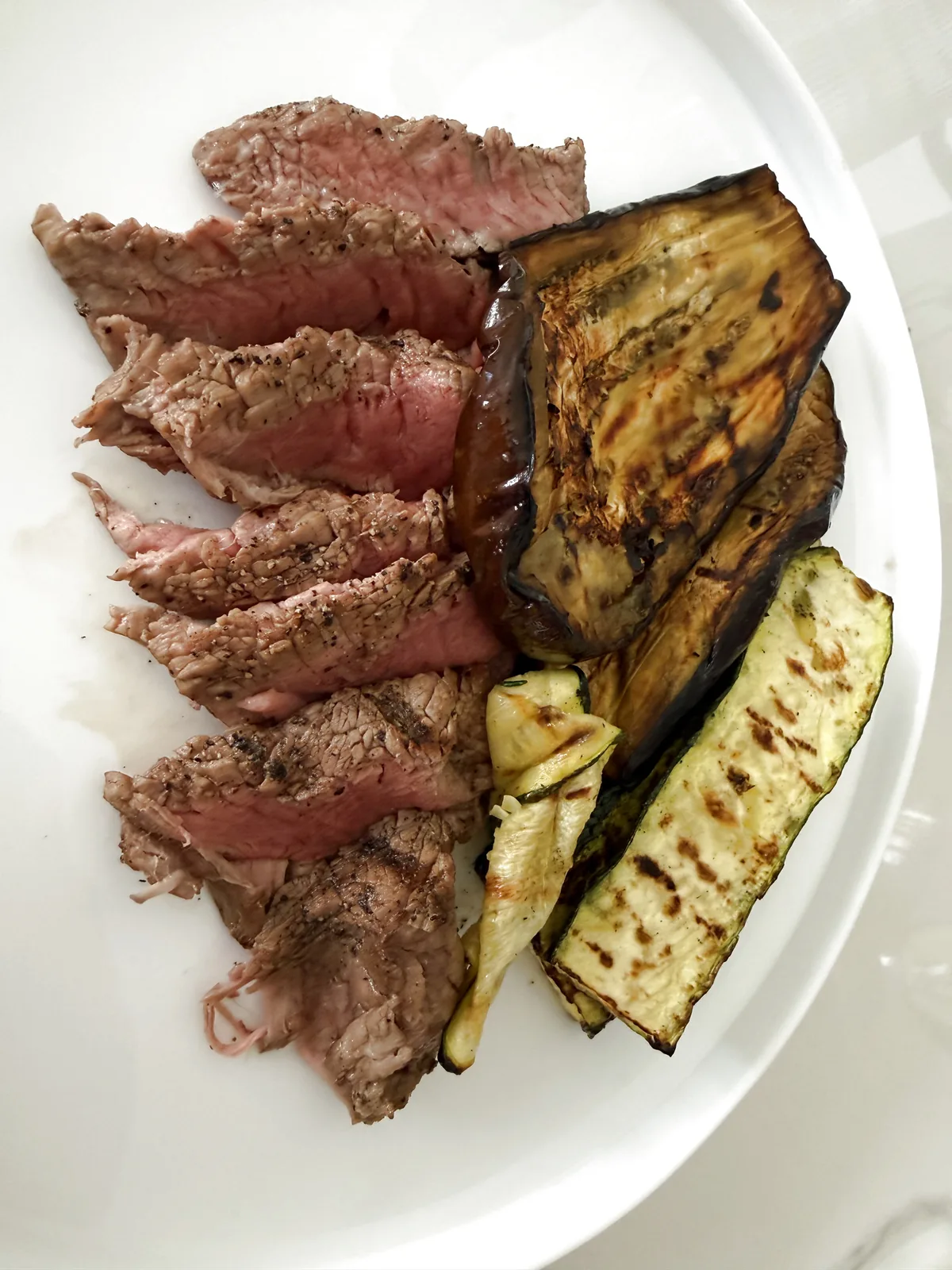
Recipe for 1 serving
Recipe at a glance
Detailed nutrition
| Display | kcal | Protein | Fat | Total carbs | Fibre | Net carbs |
|---|---|---|---|---|---|---|
| One serving | ~613 | ~58 g | ~38 g | ~13 g | ~3 g | ~10 g |
Net carbohydrate = total carbohydrate − fibre. Salt is not included. The calculation uses raw USDA top sirloin steak, full-fat plain Greek yoghurt, all 13 g oil and all 10 g butter. Household measures are represented by 4 g parsley, 3 g chives, 3 g lemon juice in total, 3 g garlic and 0.3 g black pepper. The optional rosemary is excluded. The actual result varies with the steak cut, trimming, yoghurt and the amount of fat left in the pan.
Shopping list
Ingredients
UNWIND EATS · GOOD TO KNOW
Beef supplies haem iron, the form of iron that is generally absorbed more efficiently than non-haem iron from plant foods. The exact nutritional value of a steak varies materially with the cut and the amount of visible fat. The calculation for this recipe uses raw top sirloin steak as a transparent working assumption. [1][2]
Step by step
Method
Bring the steak closer to room temperature.
Remove it from the refrigerator 20–30 minutes before cooking. Pat it very dry with kitchen paper. A damp surface steams before it browns.
Prepare the courgettes.
Cut the courgettes into thick slices or long strips. Season them lightly with salt and leave for 5 minutes, then pat dry. This removes some surface moisture and supports stronger browning.
Make the herb yoghurt.
Mix the Greek yoghurt, chopped herbs, lemon juice and a pinch of salt. Keep chilled until serving.
Heat the pan.
Season the steak with salt and pepper immediately before cooking. Heat a cast-iron or other heavy frying pan until very hot. Add the oil, followed immediately by the steak.
Cook the steak.
Cook without moving it for 2–3 minutes on each side for medium-rare or 3–4 minutes on each side for medium. Cook slightly longer for a more well-done result. Timing varies with thickness and starting temperature, so use a food thermometer for accuracy.
Baste.
During the final minute, add the butter, garlic and optional rosemary. Tilt the pan slightly and repeatedly spoon the melted aromatic butter over the steak.
Rest the meat.
Transfer the steak to a warm plate or board, cover very loosely and rest for 5–8 minutes. Resting allows the juices to redistribute more evenly.
Roast the courgettes.
While the steak rests, cook the courgettes in the very hot pan. Arrange them in one layer and leave undisturbed for 2 minutes, then turn and cook for another 1–2 minutes. Work in batches if necessary so they brown rather than steam.
Finish.
Season the courgettes with pepper and a few drops of lemon juice. Slice the steak across the grain and serve with the courgettes.
Serve the yoghurt separately.
Spoon the chilled herb yoghurt into a small separate bowl so each person can add the amount they prefer.
The role of ingredients
Why these ingredients
Beef steak
Beef contributes complete protein, haem iron, zinc, selenium and vitamin B12. Haem iron is generally more bioavailable than non-haem iron from plant sources. [2]
Courgettes
Courgettes add volume with relatively little energy. Drying the surface and cooking in a single layer promotes browning without needing a starchy side dish.
Herb yoghurt
Greek yoghurt provides a cool, tart and creamy counterpoint to the hot steak and courgettes. Serving it separately preserves the contrast and lets the diner control the quantity. Calcium may reduce iron absorption within the same meal, although the effect on overall iron status in varied diets is not straightforward; when iron intake is the priority, use a smaller amount or serve the yoghurt at another meal. [2]
Adapt the recipe
Substitutions and tips
- Pat the steak thoroughly dry before cooking.
- Salt it immediately before cooking or at least 40 minutes in advance; the intermediate period can leave moisture on the surface.
- Use a kitchen thermometer. FoodSafety.gov recommends 63°C followed by a 3-minute rest for whole cuts of beef. [3]
- For a culinary medium-rare result, chefs often use a lower final temperature, but this is below the official food-safety recommendation. People at increased risk should follow the safer threshold advised for their circumstances.
- Always slice the steak across the grain.
- Cook the courgettes in batches if the pan is small.
- Thick kefir can replace Greek yoghurt, but the sauce will be thinner and the nutrition will change.
- The steak may be replaced with beef fillet, rump steak or striploin; the calories and fat can change substantially.
Good to know
Frequently asked questions
How should I store the cooked dish?
Refrigerate the steak within two hours in a shallow, covered container and use it within 3–4 days. Store the courgettes and herb yoghurt separately; use both within 2 days for the best quality. [4]
Can I freeze it?
The cooked steak can be frozen in an airtight container, although reheating may make it drier. The courgettes and yoghurt are best prepared fresh because freezing damages their texture.
Is the recipe keto-friendly?
The calculation contains 12.82 g total carbohydrate and 9.97 g net carbohydrate before rounding. It therefore remains below the 10 g net-carbohydrate limit, but the yoghurt, lemon and chosen vegetables must still be counted within the full day.
Can I prepare it in advance?
Mix the herb yoghurt and cut the courgettes earlier in the day. Keep both refrigerated. For the best crust and texture, cook the steak and courgettes just before serving.
How should I reheat the steak?
Reheat it gently over low heat only until hot enough for your intended use; high heat will continue cooking and dry the meat. Refrigerated leftovers should be reheated to 74°C for food safety. [4]
Sources, methodology and limitations
- USDA FoodData Central — Beef, top sirloin steak, raw, FDC ID 2727574
- NIH Office of Dietary Supplements — Iron: Fact Sheet for Health Professionals
- FoodSafety.gov — Safe Minimum Internal Temperature Chart
- USDA FSIS — Leftovers and Food Safety
- USDA FoodData Central — official food composition database
Save recipe
Save recipe Beef Steak with Roasted Courgettes and Herb Yoghurt
- 220 g beef steak, approximately 2–3 cm thick, raw weight
- 10 g butter
- 5 g extra virgin olive oil or avocado oil
Remove it from the refrigerator 20–30 minutes before cooking. Pat it very dry with kitchen paper. A damp surface steams before it browns.
THE UNWIND COMMUNITY
Cook with The Unwind
Follow along for practical keto recipes, meal-planning ideas and calm support for everyday nourishment.
Join